faea gaming: July '26
Hello, again. I’ll keep it brief on this end, but things have been starting to look up a little for me after a dreadful past couple of months; things are still weird and messy and a little bit painful, but it’s all starting to ease up just enough to feel manageable again. I hope it shows through a little! I feel like I’m starting to get my spark back – if not my energy – and I’m enjoying things a lot more than I’ve been able to. I spent a lot of this month chasing all sorts of different indie interests, particularly going down rabbit-holes of older and long-running dōjin circles and their works, many of which seem to have very little coverage or exposure over here, which has all been very intrinsically satisfying to dig through! So let's talk about those, and everything else. It's a long one this time, so get comfy, maybe?
Games I Played This Month
ASTROLANCER
This is, as many ‘inspired’ indie passion project games are, very forwardly a riff on one particular point of inspiration: in this case, The Guardian Legend (1988) by means of much more modern and formalistic game design principles, and whether or not you think you’ll be into this thing may perhaps be clear to you as soon as you read that sentence. I would, likely unsurpisingly, normally be on the skeptical side here, and though there is a lot I chafe with in that respect… I really like this one! On the top-down end, it drops the ‘exploration’ pretense entirely, swapping out its predecessor’s Zelda-ish zone exploration and underwhelming random enemy vomit for much more linear, straightforward levels with enemies firing more typical shmup bullet patterns as opposed to the contact damage-focus space suffocation of TGL, and exploration relegated to secret-hunting searching for reasonably-missable yet well-telegraphed hidden rooms with either a subweapon or the game’s upgrade currency as a reward. At a baseline it plays out much, much more interestingly than TGL during the moment to moment – having to space around fast, aimed bullets and punish short windows of opportunity due to the aiming system is far more compelling than that game’s setups encouraging simply running through to the next room fighting as little as possible – but the tall character model and movement-aiming makes it all feel a little messy upon introducing heavy bullet density and honest-to-god patterns to the top-down level traversal, even though the movement is in actuality no less tight and precise than the scrollers – which themselves are fairly humdrum, with fairly unexciting enemy encounters that linger on the screen far too short for a game that does not implicitly reward shooting down enemies, but the bosses have a great mix of modern bullet-hell patterns with enough mean tricks that invoke older shmup design; I think I’d have a great time chomping on these on the highest difficulties.
There’s a lot of little peculiarities to this that, despite the wildly differing approach to its combat design and structure, ultimately manage to invoke a similar charming level of quirkiness as its predecessor does. Most directly, alternate weapons are plentiful and wildly imbalanced – only a couple of subweapons felt worth using not only in comparison to each other, but to the basic shot; and ARMS – resource-limited weapons that mirror TGL’s own subweapon system – swing between having extremely hyper-specific use cases, or being one of the lucky few that tears through screens or bosses like nothing. Beyond those, engine level quirks pare away some of the aforementioned stiff, formalistic feeling: enemies can’t act while off-screen, and post-hit invulnerability is really, really short – it’s not uncommon to get hit twice or more by a single attack if happening to be moving in the same direction as it. It rarely feels like a snappy, fast-paced action game as a result, and more of a methodical affair of picking apart its challenges through taking advantage of its peculiarities, not so unlike many games from the era of the one it’s so indebted to. Despite only feeling superficially inspired by TGL, initially coming off as the sort of NES homage that irons out the quirks that make those experiences unexpected and memorable, it winds up feeling evoking similar feelings by allowing itself to have similar yet unique textures of its own. It made me smile a lot, even in the times I wasn’t taken by its decisions, and it rekindled a personal interest in pursuing indie games – and there’s not really much better praise I can give to anything.

Sylvie Lime
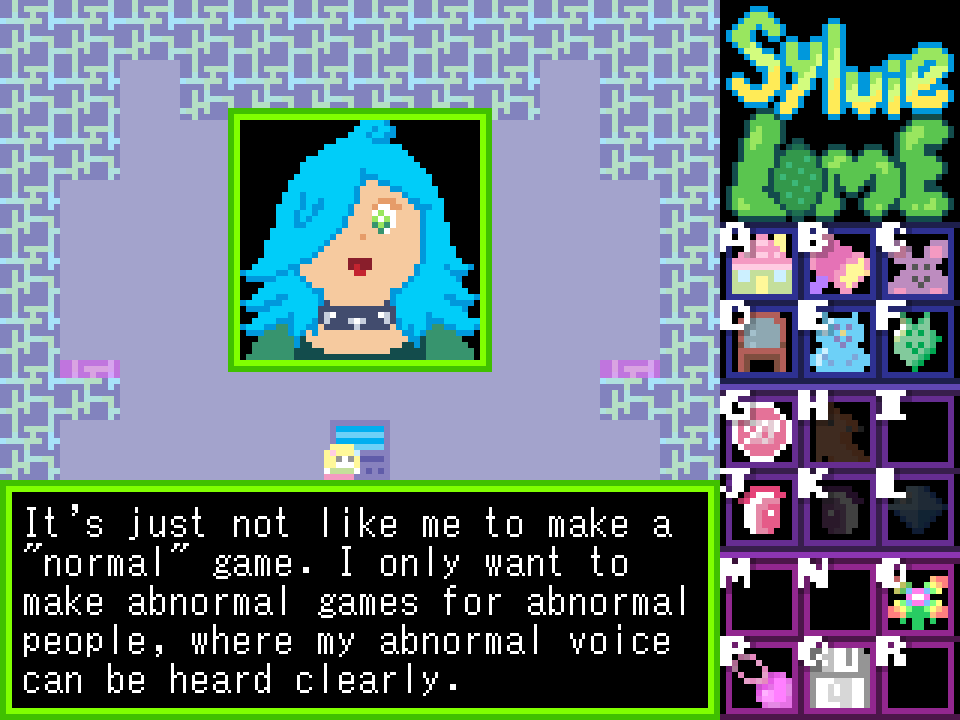
Very cute little exploration platformer, somewhat invoking Hebereke in structure through being an exploration platformer with loose-ish, self-directed exploration and goal-hunting, and movement upgrades that open up other parts of the world without being strict ‘gates’, but without the oppressive combat-attrition focus of older games with similar structures such as NES Metroid. The difference is in its unconventional movement options: chiefly the titular lime transformation which completely locks your momentum when used, keeping you floating in the exact same direction at the exact same speed that you were moving in when pressed. This, alongside a bevy of similarly unconventional movement upgrades, turns map traversal into a light puzzle box: using movement in strange and creative ways to move through each room, in order to use movement in strange and creative ways to reach different parts of the world. It’s guided enough to not really allow getting lost, but at the same time not give the space for any real epiphanies to happen; rather, solving a room simply feels like a quaint intersection of unusual movement options, and a lot of the discoveries that lie on the other side are individually entertaining moments or jokes that bear a lot of the game’s personality themselves.
It’s all wrapped in a delicate metatextual story that reads as developers sylvie and Aria putting parts of themselves – their design ethos, their personal motivations, their anxieties – into the game in the form of five fictitious game developers who created the game ‘Sylvie Lime’, using them as a mouthpiece to express these and discuss other elements about the process of creating the game very directly with the player. In the game’s own words, “When you play this work, […] you’re engaging with the creators of that world and learning more about them” – this is, of course, true for any creative work, but reading this in this game felt like it was reframing my own experience; something that is clearly unusual yet felt fairly straightforward to me ultimately wound up fostering a much deeper appreciation than I’d had beforehand, being reminded that I wasn’t just playing a game so much as having a conversation with the people behind it. People perhaps not too different from me, as an occasional small-time indie dev myself (though of course much less experienced than these creators :p ). And though the metatextual discussion on game design and art creation didn’t challenge or engage me (as it felt like it could well have been trying to) so much as, I suppose just making me feel a little seen, I played this alongside a friend with much less immersion in the ‘game design counterculture’, as the game itself puts it, and it led to a lot of interesting discussion between the two of us! I think these little takeaways are what’ll likely stick with me more than the actual act of play – but I’d like to think that’s the exact sort of engagement the developers would have wanted.
Engage to Jabberwock
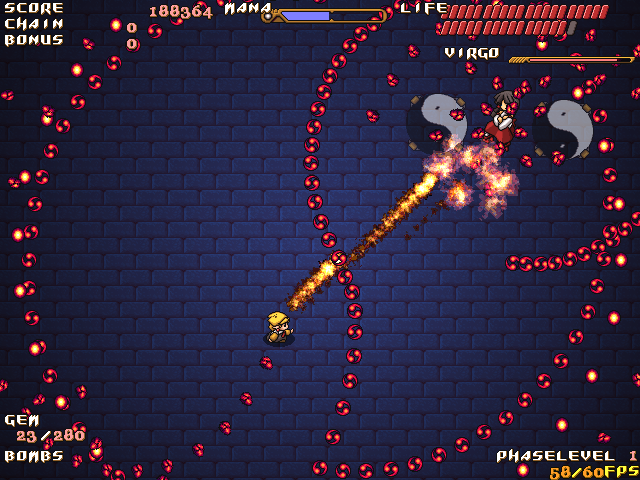
Another one of these adventure STGs, this one by solo dōjin circle Platine Dispositif whose works I’ve had my eyes on for a while… expect more of their stuff here soon, I’d say. This one’s structured a lot differently from the others I’ve played: The Guardian Legend being structured like a slightly awkward Zelda game with an expansive overworld and verti-shmup sections replacing dungeons, ASTROLANCER exchanging said game’s overworld for more strictly linear levels, and Nazo no Murasamejō making its own linear levels highly explorable and expecting a degree of routing and secret-hunting for powerups. Engage to Jabberwock instead takes place in a single dungeon with some light upgrade-collecting and key-hunting for character progression and to open doors, but more than the exploration itself is largely interested in using that structure to build all sorts of strange and tricky terrain-driven bullet-hell micro-challenges. The general process of the game – especially on the difficulties above Novice, where the game gets crazy bullet-dense – is walking into a room, despairedly wondering ‘how am I meant to even beat this’, and then slowly being able to unpick it after figuring out enemy priority, safe spots, and how to use the game’s bizarre toolkit to make progress on any of those without getting blown up in the process.
Perhaps fittingly for this game’s bullet-hell focus, the direction of the basic shot locks while firing rather than firing in the direction of movement as in the aforementioned games, allowing for the sort of aggressive precise positioning and dodging that the latter mode of offense doesn’t really afford – with the hitch being the game’s indulgence in using plentiful amounts of walls and pits in its room layouts, hugely restricting the ease of reaching safe, ideal angles of offense. Other tools make up for it by allowing easier approaches – a time-slow that reveals your character’s hitbox, a shield that cancels enemy bullets, and a placeable glyph that aims all your shots towards its centre, additionally transforming them into a fire stream that clashes against enemies’ own streams in a duel that almost evokes the beam duels of Metal Black. All of these – including the basic shot – draw from a single magic pool that heavily limits how often you can use them within a short timespan: improper planning can lead to using these tools to make an aggressive approach through a sea of bullets, only to be completely dry of mana once properly positioned and unable to make any progress. And the final piece of the micro-puzzle that all these encounters feel like is that killing enemies drops gems, which add towards a healing counter – the only way to heal other than killing bosses and picking up very limited powerups. Enemies drop more gems if you kill them in close range or, more importantly, from cancelling every bullet on-screen when the last enemy in a room is killed, encouraging high-risk gambits to keep as many bullets on-screen before fully clearing a room – leaving difficult enemies for last, or weakening multiple enemies before taking them all out at once – in order to eke out gradual valuable health increases for the long term.
Maybe it’s not all as elegant at it sounds, though – there’s a clear intersection of arcade and home-console ideologies, and they don’t always come together particularly gracefully. Most notably – the entire aforementioned health dynamic doesn’t really play out like that since the game comes with infinite continues with full-HP respawns, both allowing progress to be made simply by bashing one’s head into each room with little regard for consequence, and diverting attention away from the healing system through it not being a factor until damage starts actually being taken – perhaps an extreme argument for why the low-HP respawns in games like Metroid and The Legend of Zelda are a valuable approach, despite how irritating they can feel at times. And under a more arcade-focused lens, it wouldn’t be a particularly interesting game to attempt to 1CC or score in, as a room that hasn’t been cleared resets upon leaving – making them much more interesting challenges to be forced to plan out, but also means healing can be infinitely farmed back up, albeit rather arduously and unenjoyably. That said, this criticism is coming from a theoretical design perspective rather than one derived directly from my own enjoyment, the dissonance never really bringing down the game or my own enthusiasm towards it: it’s a very strong showing for an extremely underexplored microgenre, with very robust combat, and both the strengths and shortcomings do nothing but excite me for the potential of this format; I've had a great time poking away at this and I've got no doubt I'll be back for the harder difficulties, but it's leaving me somewhat dizzy with exciting imagining what else this microgenre could bring.
Nepheshel
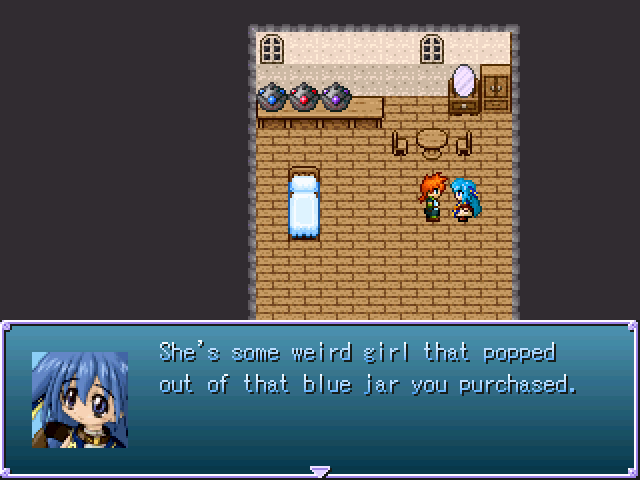
Similarly to Wizardry and its first-person DRPG lineage, it’s heavily focused much more on the process of traversing the physical space of its dungeons than the immediacy of combat, though differentiates itself heavily through the ways it defines the physical space of its dungeons: Wizardry dungeons are monstrous, grid-based labyrinths, whose first person perspective and tendency towards traps that displace the player primarily aim to disorient into heavy and meticulous map-drawing; whereas Nepheshel leans towards testing real-time dexterity and perception: maneuvering around enemies on the map, avoiding traps, and spotting hard-to-notice secrets in dungeons to open up hidden paths and treasure rooms. It’s driven by a fairly simple set of rules and ideas: enemies physically roam around the map in typically semi-random movement patterns, with colour delineation for ‘easy’, medium’ and ‘hard’ variants; enemies have specific and significant damage type weaknesses and often status effect applications that have to be countered through gear choices; and most gear has to be found through combing each dungeon for hidden doors and hard-to-find offshoots for treasure chests, rather than being bought with gold.
The way combat itself plays out and gates progress makes the earlier, more open-ended and explorative sections of the game feel like a puzzle box. On a micro level, this manifests through figuring out what can be safely fought and what can’t be (largely through trial-and-error gear swapping to eke out the biggest advantage possible), figuring out the most lucrative enemy that can be safely fought (and then trying to avoid everything else), and hunting for hidden rooms to find gear that gives new or stronger options to cover a wider range of enemies. Combat is not built around attrition, rather about individual difficult encounters – healing items are cheap and plentiful, and HP even regenerates over time while walking – so in most cases, if an enemy can be taken out once they can be taken out every time – so this weakness puzzling is the main point of interaction for the game’s otherwise fairly rudimentary combat system – and by extension, necessitates keen exploration to find those tools that expand combat options. And it broadens into accentuating the macro-level exploration’s puzzle box-y nature, too: different areas have different enemies with different strengths and weaknesses, and furthermore enemies can be avoided entirely with sharp enough movement (and perhaps a good bit of luck on the ‘escape’ command), resulting in a very open-ended approach to achieving the game’s early objectives whose route is likely driven by the gear found along the way, figuring out and methodically unpicking the routes that are currently possible in order to open up just a little bit more; and rewards pushing deep into very dangerous and unsafe territory with disproportionately strong items to carry back into earlier and easier challenges.
By around the halfway mark, the game collapses its structure down towards something more linear and singular, and most of these dynamics start to fray and tear away: open-ended exploration makes way for labyrinthine yet linear dungeons introducing very little enemy variety across sprawling and disorienting, yet ultimately toothless mazes that – in part due to the game’s exact focus on avoidable combat encounters that made those early hours interesting, and in part due to broader dungeon design drawing from a fairly static and limited bag of tricks that loses steam after a bit too much repetition – create little more intrigue or danger than the threat of running around in circles for a while. By this point, enemies become tougher and often more durable, but the linearity of the combat means the problem-solving never becomes more layered than the extremely simple ‘learn and exploit their weaknesses’ that defines the early hours in a much more textured manner. The durability of the enemies and relative lack of reward for taking them out makes the later hours of the game slip into the feeling of enemies being ‘speedbumps’, and hitting an encounter feeling frustrating more than anything. The pace of new gear slows somewhat glacially near the end as the game fully linearises itself, with one hitch… from about the halfway mark, you can buy new and always-relevant items at an ‘exchange shop’, which cost rare enemy drops instead of gold; it’s not mandatory grinding, but certainly hangs over the entire back half of the game rather uncomfortably!
I’m left a little mild by the end, and likely wouldn’t have crossed the finish line were I not doing so alongside a good friend of mine, but nonetheless can’t say I had a bad time with Nepheshel, or even feel particularly bad about stomping my way through the sections that had me feeling cold. It is, through all its highs and lows, a very substantial offshoot from any typical RPG design ethos of its time or from before, and it feels particularly valuable to experience one that exists totally outside of the anglospheric RPG ‘canon’. And this is ostensibly a meaningfully influential one – there’s almost no English information on the game’s legacy, but scraping through what little information I could penetrate led to it being cited as an inspiration for a small host of other Japanese indie RPGMaker RPGs – most I struggled to find any information on at all, but one notable was the also-English translated Demon King Chronicle (a game I’d already taken interest in separately!). But more than that historical or cultural value… it’s just really interesting to see a confident diversion from fairly well-calcified RPG standards – if only for a certain part of its runtime – and it makes me pine to taste some of that inspiration and iteration on its strongest parts.
after twenty or so hours jokingly comparing this game’s soundtrack to zeroranger music we found out that the music is not actually meant to be using the microsoft gs wavetable synth and it’s just doing so because it is in midi format and as such defaulting to that for both of us. sort of felt like getting killed three times in quick succession
Lunacid - Tears of the Moon
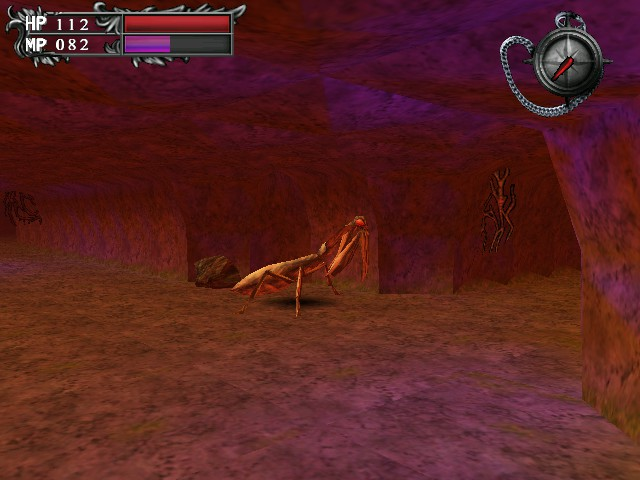
I’ve got no particular ill will towards Tears of the Moon itself, but playing through it lurched up some old thoughts on FromSoftware’s older dungeon-crawlers, and since I’ve never written about them on this site, beyond a vague gesture when I played Shadow Tower: Abyss back last February, maybe it’d be nice to put all that out there now… I’d say my main sticking point with these series is that the combat is both rather easy and so, very slow – being defined not only by trudging, six-button movement, but also a power meter akin to the Mana series, where your attack strength is dictated by a power meter that empties on swing and slowly fills back up over time. I have, to be totally, honest, never played one of these with particularly gripping combat, so they have to do a lot of heavy lifting elsewhere – Shadow Tower, for example, does so through light yet unusual resource management systems and a maze-like world structure, and King’s Field IV boasts some of the most beautiful visuals delivered through a logistically dizzying spiralling and interconnecting world. Though I’m very taken by KFIV specifically, I’ve found it difficult to sink myself into the others: Shadow Tower I enjoyed, but didn’t really dwell on much afterwards; Abyss I found fairly plodding despite its beautiful art direction, and I just couldn’t penetrate the first game after multiple attempts.
So when I say I felt somewhat underwhelmed with the couple of hours I put into Tears of the Moon, it’s less an indictment and more, I suppose, a bow of respect towards KIRA’s commitment to making an earnest and heartfelt homage to what I’ve always seen as a fairly awkward and very hard-to-execute formula – and doing so in the official engine, without being able to bend or break its rules particularly far as in Lunacid proper. It comes wrapped in a very endearing artstyle and, much like how I often describe KFIV, feels somewhat of an art gallery for its own visuals – a menagerie of cute and lovingly-animated creatures bathed in the striking yet gentle palettes of their locales. The combat is of course perfunctory, but Tears of the Moon allows MP regeneration through hitting enemies which allows more liberal use of magic; it doesn’t deepen combat so much as make its visuals a little more varied, but having that variance is welcome when the other games push against magic use a bit more traditionally. I played alongside a friend, and we both sort of silently decided to move on after our initial session… but it spawned some interesting discussion about the form of these things between the both of us, so I’d say I’m still rather happy for the short time I spent with it.
Monster Hunter tri
I’m finally reaching the end of Village, after a very long and disjointed playthrough over the course of a year and a half; it’s very hard to reconcile with my own thoughts on the game after taking such long breaks between major points of progression, but I think this one’s fighting to become my favourite Monster Hunter game. I’ve sunk cleanly over a thousand hours into eight different entries and, much like anything else in life, my priorities have shifted with time: I’m familiar with the motions, strengths and awkwardnesses of its combat to a worryingly intimate degree, and might just be getting a little bit weary of it all to some extent, and so it does less to excite me nowadays as the systems that surround it do; chiefly the item and money economy, and the way they both interact with the decisions you feel willing to make throughout a playthrough: the cost of items for combining specific countermeasures for a particular fight, the ways monster difficulty and material drop rates affect the gear paths you’re willing to commit to, even just the cost of drinking a single Mega Potion in the very early hunts. The RPG side of the Action RPG, in essence. I see tri as a particularly special entry in these regards for a few reasons. The clearest as soon as bouncing off a Qurupeco’s claws is that good, high-sharpness weapons are hard to come by, both heightening the importance of positioning in combat for lack of avoiding bounces, and feeding the imprtance of economic build decisions because the best ones are so expensive; it often feels less so about figuring out the best weapon, and more about the best balance of effectiveness and feasibility – you really don’t want to force yourself to grind for a plate or other low-chance drop, when a completely different branch of the weapon tree could have a similarly-useful weapon that’s much easier to craft – but equally, you do need to commit to something that’s going to wind up being good, and not drop to yellow sharpness a minute into the hunt.
But the main thing that sticks out to me is Moga Woods, and how intimately progression is woven into the village progression. Hunting monsters in the Woods is the primary means of gaining resources, and the early hours of village are a tight balance between spending scarce resources on permanent progression and eking out what extra materials can be afforded from the farm. Of course, as in all succeeding titles, these dynamics gradually fade away as farm upgrades pile in and resources become more plentiful, leading to consumable-gathering becoming almost entirely self-sufficient – but the importance of the Woods never drops, since many importance conveniences come from resources exclusively found there. But what makes it more compelling than just being a secondary objective – a place where you’re expected to hunt without quest supplies or rewards – is the way it sinks into the game’s routine: monsters rotate in and out of the Woods on a calendar system, with different rarity items coming from different tier monsters, and being used for different item trades at the Argosy. I wound up spending a fair amount of time planning myself around this cycle: checking the next three days of Moga Woods monsters, fighting the ones that gave useful trade items and doing progression quests during other days. In typical Monster Hunter fashion, though, it’s certainly not a bulletproof system – I sort of petered out near the end when it started asking for me to wait for 4* monsters to appear for rewards I really didn’t need at that point.
Nonetheless, it plays into a feeling that tri is attempting to subsume you into its world and its ecosystem, with the focus being placed on the player and hunter having to adapt to the rules of the world rather than the world bending itself to you, and equally the presentation of said world being a major part of the game’s presentation. It is, perhaps infamously, the game that introduces underwater combat, occasionally hoisting an entire new control scheme and, to an extent, moveset onto you, while granting amphibious monsters a far richer moveset while underwater – the flagship Lagiacrus carrying a full, threatening and evasive thunder-based moveset while underwater but being very little more than a big Royal Ludroth when forced to surface. Monsters generally feel as though they have a depth to their behaviours that aims to integrate them into their ecosystem: the Qurupeco being the clearest example as it mimics the cries of other monsters to attempt to bait them into joining the hunt and ganging up on you – sometimes getting caught in the crossfire and being ganged up on itself instead. These details and these feeling are what sell me on the experience of tri, perhaps somewhat more than any of the later games that I’d consider just a bit more fun.
the multiplayer in this one really sucks lol

Time Tripper
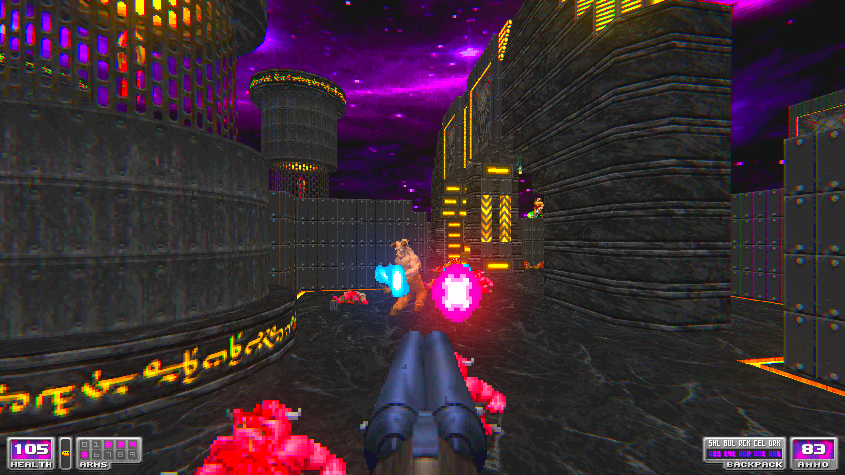
There’s a really interesting dialogue here, integrating STG projectile patterns and, to an extent, bullet density into a DOOM-style FPS. These games’ lowest moments, to me, are when you’re simply circle strafing around a group of projectile enemies, sort of waiting for them to die, because you know they won’t be able to hit you; a fairly elegant solution to this is allowing projectile bullets that fire in any direction other than right in front of you as means to cover alternative angles and catch thoughtless strafing: think II’s Mancubi, which can be ‘macro-dodged’ via circle-strafing at longer ranges, but whose spread shots will likely clip you if trying to apply the exact same strategy in close quarters and confined spaces. Though my first impressions with Time Tripper were that it spends significant time with little interest in this conversation, with most projectile enemies simply retooled to fire more bullets along the same threat range, and hitscan enemies’ attacks replaced with straighforward, though hyper-fast, aimed projectiles – of course, save for the loathsome Arch-vile. It is also much more structurally defined by neatly sectioned-off combat arenas as opposed to the typical more exploratory and dungeon-derived DOOM map, which highlights the issue further: with less means to lock down sight-lines, the only way to stop endless strafing is by closing off space, which it tends to do fairly modestly.
But then, you know what? It made me run through a cyberdemon maze chasing around a mischievously-teleporting yellow keycard, and all of a sudden it had my full attention.
It feels like it starts to come into its own starting with M4, and only continues to blossom afterwards. Not only is there an extra eye towards intelligent space constraints and, well, heavier use of those to lock down space – but the new enemies become more frequent and more interestingly-utilised. One enemy fires slow, aimed bullet waves, but zips around haphazardly and explodes into a spread of bullets on death, making itself both hard to hit as well as discouraging any sort of close-range approach out of risk of them hurtling towards you at the exact moment you shoot and effectively telefragging you on death. Another fires a triple-spread of bullets that I found myself honest-to-god streaming, because the outer streams completely wall you out of circle-strafing them. And the tighter, more confined arenas do ultimately transform the old hitscanners back into their old selves, as the tight space alongside their general high density does make their shots unavoidable in a lot of cases. I very suddenly found myself playing that intelligent iteration on DOOM that I’d been pining for since the start, the one that uses its unique language and inspirations to build on its source material in interesting ways – even if it was still all arena maps :p. Very much looking forward to what End of Starchild is gonna get up to.
Pocky & Rocky Reshrined
I predicted back in February that this game would likely grow on me over time; coming straight off the heels off SNES Pocky & Rocky didn’t really do it much favours when it’s essentially acting as just a slight mechanical iteration on my dearly beloved, but with level setups and systems I didn’t find quite as compelling. I sort of knew I was being unduly mean to this one just through poor timing, and though I don’t necessarily disagree with anything my past self was saying back then, with some time away and a fresh perspective, I’ve found ways to appreciate what it’s doing much more. The first was trying to limit myself to using the fire shot: these down bosses comically fast, and the bosses in this game are much more refined (and annoying!) than most of those in its predecessor, but more importantly, the level setups feel much more designed around that thinner shot range than around the myriad other ways Reshrined offers you to slowly and passively pick them apart. As Reshrined rarely pressures you into a level setup – instead giving you ample space and room to walk backwards and easily pick enemies off one-by-one – the lack of range and higher damage naturally lean into affording a much more aggressive and active playstyle by making easy opportunities to split up groups harder to come by. The other is… my new favourite woman in the whole wide world, Hotaru Gozen, who comes equipped with:
~ A short range shot – with no upgrades, it doesn’t even fire a projectile!
~ Charging this shot fires off a flurry of arrows whose trajectories change based on shot type, though Hotaru is locked in place for about half a second while shooting
~ A very long-range melee attack; charging it fires a giant, lingering projectile with melee properties (i.e. deflecting bullets)
~ A full suit of armour. she’s so cool
Hotaru is defined by limitation in a game where the other newcomers are defined by the extent to which they can break limitation. Her only long-range options take both time and safety commitments to use – the bow takes about half a second of charging to use, and takes half a second before Hotaru can act again; and charging the melee projectile locks away access from the all-important melee swing, the game’s core defensive tool. Lacking a way to reliably and quickly put out screen-range damage encourages her to get up close with her strong medium-range toolkit, and though she could easily sit in the middle of a room and swing her enormous melee attack around – this does work well enough in a lot of cases! – the key to her frightening damage output is that she can charge her melee projectile while firing her standard shot, which in turn locks her defensive game into a heavily movement-focused playstyle while holding the charged projectile thanks to losing instant access to the regular swing – if you’re a bit too determined to hold onto the charge for juust the right moment, it becomes much more movement-driven than any of these games this side of Kiki Kaikai. She is nonetheless incredibly strong in her own right, and is far from a panacea for all the game’s weaknesses, but stands out starkly for being radically limited compared to every other character in the game – even the original duo who benefit from powerful new tools in a game that already doesn’t bite as hard as the one they came from.
Also, her regular shot goes through walls. This is very funny sometimes.
I think my favourite thing about this game nowadays, though, is how hard it leans into one particular very strange and anachronistic-feeling system that feels indebted to the original Kiki Kaikai more than anything. In that game, if you uncover a bomb pickup while your score is a multiple of 1000, the bomb turns into an extend pickup instead. It’s the main way to get extends in that game, and though it’s not totally transformative due to it being a checkpoint-respawn game that resets your shot upgrades back to default – Gradius-style – on death, it does take an awful lot of weight off the expectation of perfect play, just for being armed with the knowledge and a little bit of score manipulation. Reshrined implements a similar but much more nuanced iteration on the same system: the game has ‘shop’ roulettes throughout each level that can be spun by spending coins gained from killing enemies. But the result of the roulette is completely deterministic, based on how many coins you’ve picked up: once you know how many coins correlates to which item drop from each shop, it’s rather easy to rig the most valuable drops from each – generally, a shield from the 50-coin shops, and an extend(!) from the 100-coin shops – but it takes a little deliberate collecting and avoiding coins scattered across the floor in order to rig it properly; it’s a very captivating way of literalising what once was – and to an extent, still is – a Druaga-esque arcade playground secret.
What’s the point of playing, though, if extends are so easy to get hold of? What’s the point of playing an arcade-action game where you basically can’t lose? It’s certainly not a hard game without them, either – my first three clears of the game were without both the shop-rigging and most of of the static hidden extends – nor am I playing for score, which swings in the complete opposite direction and demands basically perfect play: never taking a hit or using a bomb to ensure full score bonuses on all health, shield and bomb pickups. I see mechanical engagement commonly attributed to difficulty, which makes sense on the surface – the harder a game is, the more it naturally demands deeper levels of engagement with its systems and nuances – but they aren’t strictly intertwined: there’s plenty of perfectly easy and approachable games who still grab me just as much as the fiendishly difficult. How Reshrined ties itself together in this sense is through its powerup system: much like Pocky & Rocky, shot power is lost after a certain amount of hits, though rather than that game’s very neat and readable ‘3 hits → power drop’, Reshrined’s power drops are harder to read, but much more aggressive – you’re often losing power after every single hit, especially later in the game. It works as a meaningful level of punishment that is both well worth respecting and acts separately from a strict failure state: losing shot power makes levels both harder and slower, limiting what your character is capable of doing, which naturally makes it very desirable to avoid even when in a situation with enough lives stocked to assuage any risk of that power drop actually threatening a run reaching the finish line. And in turn, the rate at which power can drop in this game compared to its predecessor encourages shooting for a high level of play, despite it being unnecessary to comfortably clear the game.

~*ʚїɞ*~
Thank you for reading, as always. That was a lot, wasn't it? This month, I’ve felt a need to spread my wings; to do more with this site, my writing and my other creative pursuits, and to make more and stronger connections with people who do similar things to what I do. I’ve been running this site for over a year now, and 2026 will be both my first full year doing this, and my first full year writing pieces specifically for this space. It’s been very welcome and fulfilling detaching from my use and reliance on other services to put my voice out there, and watching this space take form around me and metamorphose into something that feels very representative of myself. But I’m very good at locking myself away in my own little world and chugging along at my own pace, for better and for worse; I’ve had multiple times over the course of running this site where I’ve felt somewhat stagnant and stifled, and it’s been brought more into focus again lately now that the site’s been noticeably getting a bit more visibility. It is visibility I obviously appreciate – it’s not easy to come by as a small, fully independent site, and I’ve historically never been particularly good at putting myself out there – it's just growing a long-running urge to do more with what I do.
The first thing I’ve done is expand my old ‘games’ page to feature a lot of old visual art dating all the way back to 2020 (unfortunately anything before that seems to be lost to time). I’d like to draw more often, and I’d equally like to share more of what I do to the world, and I’m hoping that this will be both a good motivator myself, and something that’s fun to see. There’s a separate RSS feed for art updates, so you can opt in or out of both this and the writing feeds, if you feel like it. The art RSS is as follows:
https://faearie.neocities.org/rssart.xml
I also feel as though I want to branch out of writing pieces that could be exclusively classified as ‘video game reviews’. I enjoy what I do a lot, but I feel a little stifled sometimes by how limited my output ends up being… I don’t often find games that I both feel exceptionally passionate about to want to formalise my writing about beyond what I do here in my journal, and end up being actually capable of fleshing out a full piece about. I’ve spent the past month or so reflecting on that, and I think it’s part of the reason I’ve been a little low on writing motivation as of late, so I want to try to expand what I feel capable of writing about and find other ways to bring cool things to people’s attention, and hopefully with that I can find more passions I can write about and share.
I’m also working on updating the ‘others’ section of the ‘about me’ page. I want to put more effort into shouting out and uplifting other independent art writers: the plan is to expand my current list of recommended sites with short blurbs and descriptions, and then additionally have a list of buttons as a much larger list of basically any site I find particularly interesting or valuable (friends: if you have a button for your site or blog or otherwise, please let me know!! I want everyone to be on there). I also want to dedicate some space in my articles – maybe all of them, maybe just these journal entries – to explicitly shout out some cool things I’ve read recently. I’ll start now:
Veritas Tales: The Witch of the Dark Castle and the Good New JRPG
This article from Ogre Run discusses the long-running history of gamebooks to highlight the significance of recent indie RPG Veritas Tales: The Witch of the Dark Castle, a gamebook-styled indie RPG directed by Yoshio Nishimura of ex-Capcom and Vanillaware pedigree. To be honest, just having the history of gamebooks recited back to me made me smile a lot: I had a lot of Fighting Fantasy and other perhaps more age-approachable ones when I was very small, and they’re a big piece of both pre-video RPG and my childhood that I’ve largely been looking over. There’s a good chance I’ll play this one soon!
Q+A: What Does "Arcade-y" Mean?
I’ve felt like ‘arcade’ or ‘arcade-y’ as a genre descriptor has always felt like a bit of a weird colloquialism, in the sense that it’s a broad gesture at a lot of particular tropes but feels very difficult to actually define; so I really enjoyed reading pang’s very descriptive and dense attempt to consolidate what a definition of the term could actually look like. He brings a lot of well-educated discussion about the contexts and literalisms of arcade games in order to reach his conclusion, so it’s a very interesting and informative read all around.
Oh, and! I entered one of those game jams with a group of friends. Go play our thing!!!! I’ve got grievances with the (frankly sort of super-evil) four-day jam structure, and I burned out kind of hard before even four days were over… but I’m really happy with how everything ended up. My wonderful friends deserve much more praise than me, frankly, so go give it to them. :p. Say nice things to us!!
I won't plug it again after this post, but since I did sort of blow it up and remake it a month or so ago, you can use my bsky as a way to keep up with my posts, or just find me posting silly. Anyway, that's all from me this time. Be good to yourselves. I’ll see you soon, I'm sure. ~♡