Pocky & Rocky
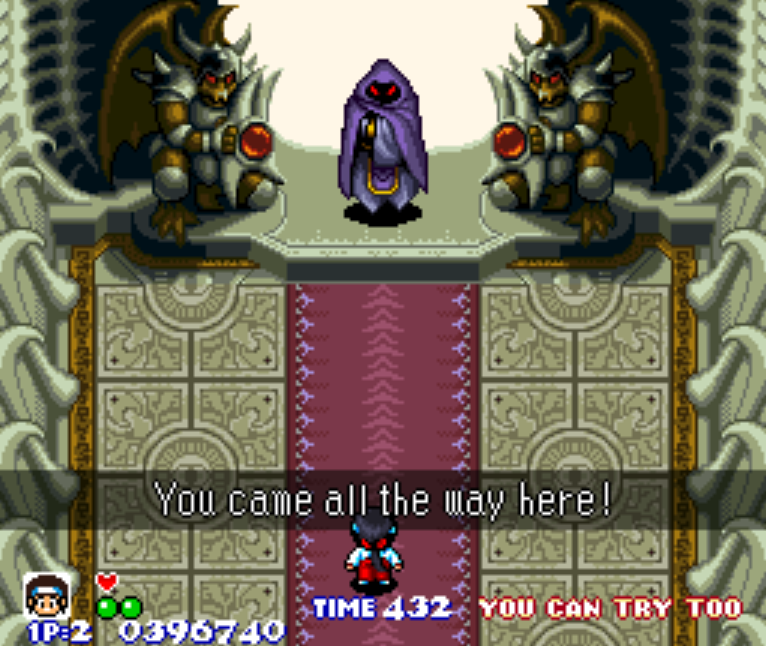
My first hour with Pocky & Rocky was one full of frustration and confusion; for a host of reasons, this felt like one of the harshest onboarding experiences to a game that I’ve ever dealt with. The small and easily-cluttered screen size and slow movement speed makes avoiding attacks on reaction incredibly tricky, with both defensive tools having significant downsides: the melee attack breaks projectiles but locks movement and shooting while swinging, and the slide dodge has almost no invincibility and slows to a crawl at the end, making it easy to still take a hit whilst dodging. Losing too much life reduces shot power by one level, dropping both damage output and effective range – base power shots only travel in a thin straight line, massively limiting flexibility in approaching the game’s setups when only able to cover eight strict directions. The first level pushes back against holding shot power like a tidal wave until the game’s mechanics and dynamics are well-understood and the stage half-memorised: many enemies that pop out halfway into the screen with little warning, a small section with foreground visual excess where bone-throwing skeletons throw instant projectiles that blend in with the floor and cover the cramped corridors entirely, forcing liberal use of the melee to deflect them whilst still maintaining forward momentum, and failing any of this a little too much means very likely being swamped by the final bridge section with new enemy types covering the whole screen and swarming from practically every opening. Get through all this, scrape through the boss, and after using a continue on the next stage… learn that continuing resets the max health boost gained from clearing stages, capping back off at only four hearts.
It was a really nasty hurdle to get over initially, but many of those frustrations became really, really valuable dynamics – ones that often lower the game’s difficulty, rather than heighten it – once that hump was behind me. Typical shoot-em-ups feature power loss as a punishment for losing a life – i.e. taking a single hit – usually dropping back to default or very low shot power, leading to a very harsh ‘recovery’ phase until regaining a comfortable amount of strength. This approach demands an extremely high level of perfection where failing to meet that demand can feel like being thrown back in just to die and die again without the physical capability to meet the game’s challenges. Pocky & Rocky’s systems are far less extreme in comparison, rather evoking a constant tug-of-war of resource gain and loss. Though avoiding individual hits is far more difficult than in a traditional shoot-em-up, shot power only drops one stage at a time after taking three hits since the last pickup; with the generosity of health and power drops this makes individual scrapes very easy to recover from, whilst harder sections can still feel like constantly fighting to stay afloat against the threat of spiralling resource loss. The low range of low-power shots can harshly reframe individual challenges, forcing learning a fully different approach just because of how restrictive low range can be – the mid-Stage 3 bat room is a section that can be easily solved with full shot spread, but going in without demands a full understanding and planned response to how the bats move, and constant tracking of their spawns and timers for target priority and to avoid being cut across from the other side of the screen. Bombs, then, due both to their scarcity and the difficulty of avoiding damage on reaction, lend most organically to be used either proactively to either prevent excessive resource loss if entering a particularly nasty section while underpowered, or routed in to not have to risk certain sections at all.
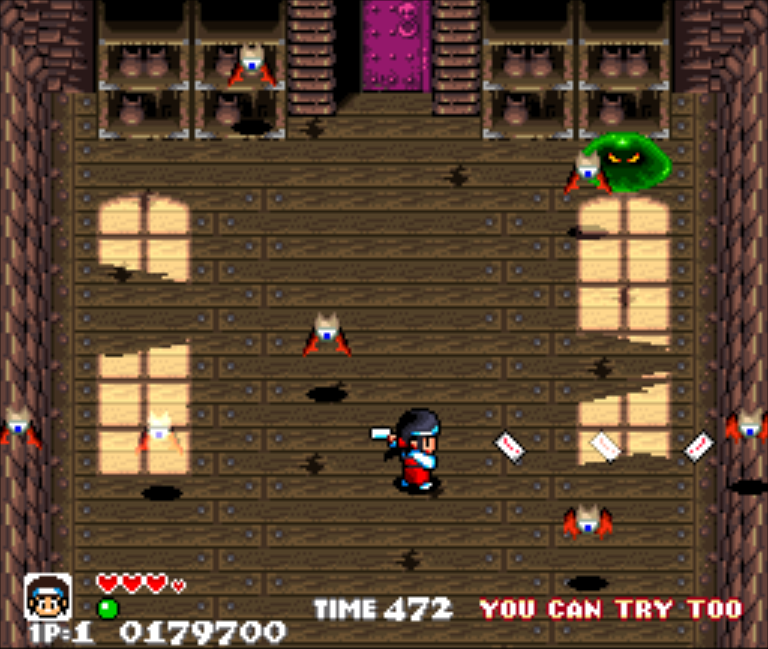
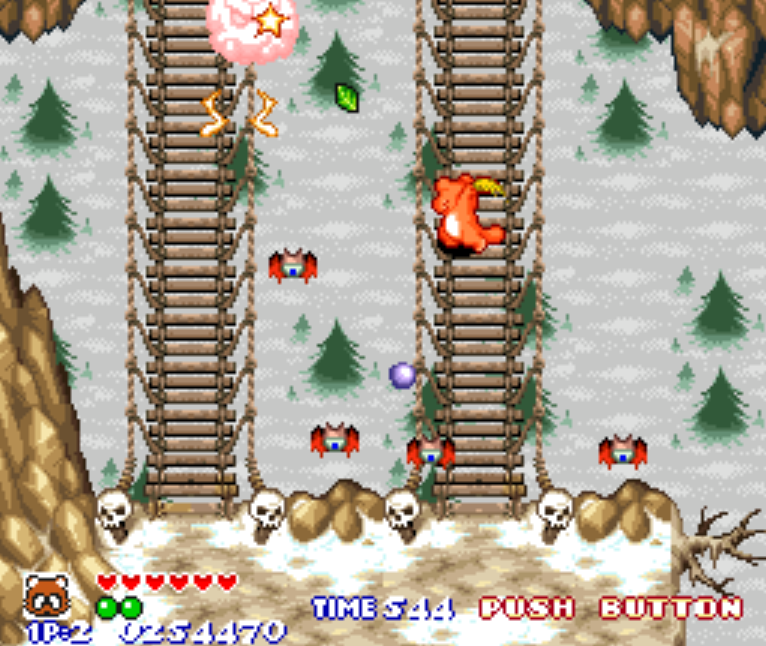
As well as lightening the expectation of absolute perfection, making the resource game ultimately very forgiving and recoverable is a perfect decision for transitioning a legitimately difficult shoot-em-up into a format with less tight dodging and readability – because if it weren’t so forgiving, the stages wouldn’t be able to be as high-pressure as they are! At its best, Pocky & Rocky is keeping you on your toes at all times: enemies coming from all sides, popping up sharply and unexpectedly around you, pressuring in ways that are easy to deal with individually but hard to expect or deal with so without walking into them, their projectiles or anything else. The pacing of these stages is directly tied to your own confidence: playing slowly is usually safer, so speed is earned through knowledge of the stage and the ability to deal with threats before they appear. Or, it’s pushing you into tighter positioning challenges to squeeze in your eight-directional shots while contending with against boss attacks or environmental challenges. Stage 3’s Genie boss and Stage 4’s clouds perfectly contrast for both angles of this – the former is easy to dodge but whose threat range and awkwardly-placed hurtbox make optimising a potentially drawn-out fight demand very interesting movement, hovering just out of range of its fireballs then situationally dipping in either horizontally or diagonally to tack on as much damage as possible. The latter instead expects a perfect understanding of a moving threat zone under extreme spatial limitation: firing lightning whose shallow angles cover the tight vertical bridges in a way to force perfect positioning around the clouds’ horizontal movement to avoid damage: misstep slightly and take a hit, move too close and take a hit, and move too far back and cause the stage’s respawning enemies to start swarming again. These elements often culminate in the later stages to create challenges where enemy swarms push against extremely restricted movement, which at best demand a deft understanding of both complex overlapping threat zones and enemy prioritisation – though at worst encourage incredibly sluggish play to avoid risking damage.
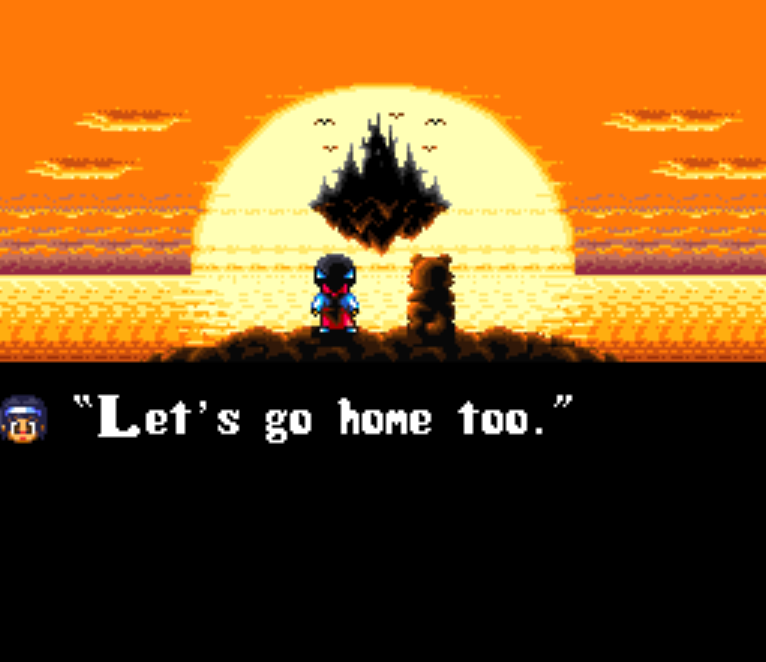
Having access to unlimited continues can so easily act as a trap. It can seem such a tempting prospect, when given the option, to slam the continue button over and over to see the end of a difficult game, resulting in death-looping that, in a game with instant respawns, likely means gliding effortlessly through a game with access to a dissatisfyingly-infinite health stock, and in a game like Pocky & Rocky with checkpointed respawns, can easily turn into painstakingly slamming against the same difficult sections without access to resources from previous stages. In short, it’s not only the least interesting way to see the end – it’s probably the least fun, too! Allowing yourself to game over and retry to the time to learn each section’s snags and intricacies over time, becoming consistent enough at each section to get through them cleanly, and see that gradual improvement cascade over time through having more and more resources available for each section, both forces a deep understanding and application of a game’s systems and intricacies and teases out a very tangible and obvious feeling of progression improvement; the positive feedback of playing through a stage that used to be a wall, and being hit with the realisation of just how much easier it is now. Pocky & Rocky’s continue system then feels very sharp under this lens: a checkpoint continue system that actively revokes the incremental max health boost gained from stage clears feels a clear statement that, while useful for focused practice – being forced into low-power situations can bring out epiphanies that stay useful regardless of condition – continuing is not the best or more interesting way to approach this game for completion. It knows the most fulfilling way to approach it is to spend time learning the stages, finding ways to both speed through when ahead and safely recover when far behind, optimising boss positioning, finding some of the game’s generous amount of secrets, and then blow through it in one clean cut – and actively punishing continues is its very forward way of asking you to meet it on those terms.
There’s enough for me to bristle against in this one: lots of stage learning coming from memorising attacks that feel a little too unreasonable to respond to for the first time through, a slight overreliance on the melee that often feels like it needs to be swung to pre-empt projectiles that haven’t been fired yet, said melee-heavy parts feeling really stiff due to melee swings locking movement, and some really slow autoscrolling or cycle-based sections rearing up fairly frequently. But through all the little gripes, what’s kept me in love regardless is how gentle it feels for an ultra-hard arcade-style game. That’s not only from the ultimately very forgiving push-and-pull of the resource game that allows a huge cumulation of mistakes to be fully recovered from – something that vastly distances it from typical shmups, where getting hit a very small number of times is all it takes to snuff out a run – and not only from how light the execution ultimately is for such a tough game, making progressing for the clear feel more about solving sections like a puzzle than grinding out runs until managing to execute on everything perfectly, but the very delicate-feeling presentation, distant from the creeping bombast of the ‘90s arcade game as well as the sometimes sickly-sweet ‘cute’ games acting in direct response. Visuals are light and fluffy with very little excess to obfuscate important information, and the music transitions throughout the run from upbeat and encouraging to playfully haunting. It’s a very tricky game, but one that feels warm and comforting, once you take the time to get to know it.
~*ʚїɞ*~
Thank you for reading, as always. Firstly, the elephant in the room... all my other pieces so far have been about something other than strictly mechanical discussion, and I didn't really know how to title this one without a specific overall point to lean back into... so I just didn't :p. I'd have liked to have a cool title for this one, but anything I came up with felt a little forced, so I decided it's maybe best to rip the bandaid off early in that sense. Hope it doesn't come off a little boring!
As usual, if you like what I do and you’d like an easier way to follow it, you can use the RSS feed to keep track of updates to the site itself; or you can subscribe to my Substack and get these beamed directly to your email box – it’s free and always will be. Love you all. See you next time. ~♡