faea gaming: March '26
Hi, everyone. Hopefully the site's layout changes are nice. As usual it's a bit of a work-in-progress, but the whole site's been one since publishing. It's getting closer to what I want from it in function, though, so soon it'll just be time to make it look nicer. Please let me know if any of the cool new bells and whistles don't work so well on phones or other non-standard monitor resolutions; I'm still learning how to wrangle all vaguely-complicated layout stuff well, and I feel it's likely to break in ways I wasn't ready for. Anyway, this month's been really, really heavy on the arcade games again, though I'm feeling my fixation slipping just a little (perhaps welcomely?). Over the past three or so months I've basically been window-shopping for games I feel like I can hold onto for the future, and get really into once I stop seeking novelty as much as I do right now and just want to sink really deep into something. It's why these recent entries have been so full, as well! I haven't been playing more than I do normally, but I've been putting less time into more games, with juuuust enough to form enough of an opinion that I can write about.
Games I Played This Month
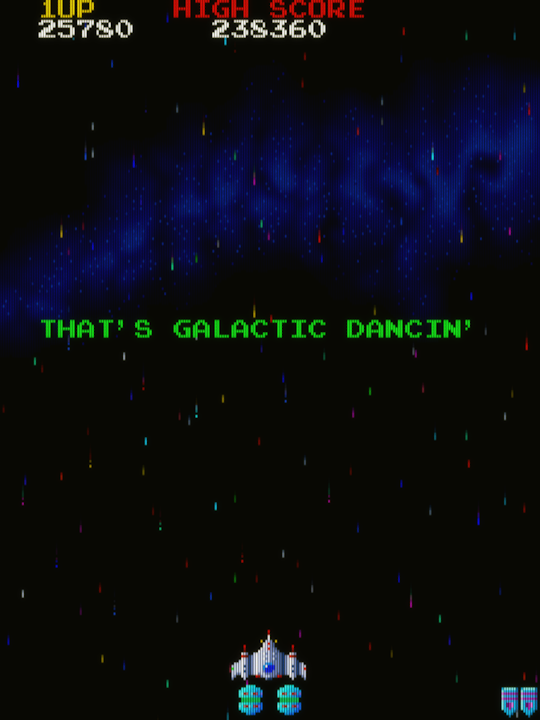
Galaga '88
Wrote a full piece here, but I really, really love this thing. Galaga ‘88 >>>>>> all of cave toaplan raizing etc. etc. etc. put together I don’t make the rules sorryyyy. I don’t feel a need to repeat everything that I’ve already said there, so instead I’m gonna use this space to talk a little about… shmup structure. I don’t find the structure or typical design ethos of most currently-popular shmups particularly interesting, to be honest, unless that specific game is doing something I find really really special – I think Mushihimesama, for example, has ridiculously good and interesting levels, but I still struggle to play it very much – and I’ve found myself leaning towards ones that are really different structurally as opposed to those that have refined one particular approach to a razor’s edge. Fixed shmups play so little like what came after, and I’m finding their particularities really, really compelling when given a few extra layers of iteration beyond Space Invaders or Galaga. It’s really, really easy for me to say that Galaga ‘88 is my favourite one, but that’s because there just aren’t many!! I know of Gyruss, a couple of ‘90s Space Invaders games, and this. I feel as though, in general, video games have been laser-focused on Advancement very much to their detriment – likely because they’re positioned not just to sell themselves, but as a reason to buy into the tech arms race of new consoles, more powerful PC parts etc. – and I feel their intertwinement with that arms race means they often end out outrunning their own potential. Think about the scant few late-NES games that really got to push the hardware to the fullest and feel far more advanced and impressive than the early SNES games that were meant to supersede them, or the fact that modern indies are chasing more and more different Vaguely Retro artstyles – particularly now that low-poly, low-res 3D seems to be becoming more viable for small projects – because they have a valuable style and level of abstraction that meaningfully differentiates them than their higher-definition High Tech successors. I wonder if subgenres like fixed shooters are a victim of a similar fate – being superseded long before reaching the potential of what a fixed shooter can be – and it’s an almost crushing shame that, as someone who likes survival-focused arcade games more than score-attack ones, there’s only, like, four fixed shooters I know of at all that fit that niche? I don’t know how to finish off this ramble or if I even said anything meaningful about what I meant to say (or anything at all) so uhhh yeah Galaga ‘88!!! It’s the cutest game ever. Someone should make a game like this except you kiss all the bugs instead of shooting them and then the medium would basically be solved forever.
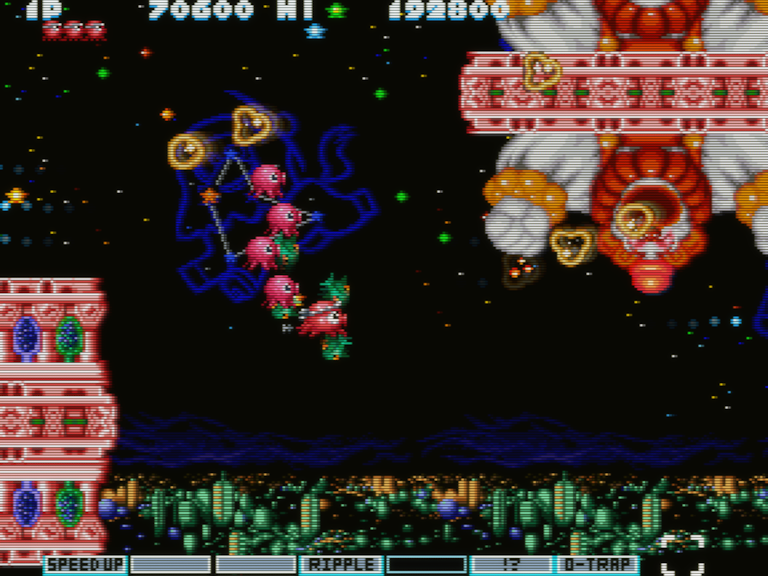
Parodius! From Myth to Laughter
The biggest smear is the powerup roulette: certain pickups begin a fast roulette spin across your powerup bar, and pressing the upgrade button instantly grants the powerup that was landed on. Early on, or with few powerups, it acts as the risk/reward system it feels like it’s supposed to be, with the potential to give something very deep in the powerup bar for the cost of a single pickup with the risk of accidentally landing on something unwanted: the wrong shot type, an extra level of speedup, or the ‘?!’ ‘powerup’ that simply resets your ship to nothing. There is a very cruel humour in how the more powerups are gained and maxed out the more likely it is to land on the ?!, as there are less other slots left on the powerup bar to land on instead, but in motion this means avoiding as many of the roulette pickups as possible – which means memorising every roulette pickup in the game, as they look identical to regular ones. And if you use it, you have to divert a lot of attention off the game altogether to focus on where the roulette cursor is. It’s a bit grim!
It’s a small blemish, though, and one that can, albeit frustratingly, be worked through via said memorisation; otherwise, this game feels like a really strong showing. Of course, a lot can be attributed to Gradius itself: the powerup system giving a huge amount of power to work towards over time, with a frankly absurd max strength being balanced around how just one hit takes it all away. The obvious contradiction is that playing well is rewarded with having to engage with its levels infinitely less through having much more shot power and coverage, whereas the situations that expect the most precision and deliberate play come as a punishment for getting hit. I feel it works in motion for a few reasons: a high power ship feels both rewarding and tense exactly for those reasons, that the (so far very well-considered!) checkpointing initiates a really satisfying understanding and execution check of any particular level section to worm back up from the very bottom, and that a rather harsh rank system will help that recovery phase hit often. I mentioned this when talking about Pocky & Rocky, but the purpose of continues as a practice aid feels most pronounced here: continues are fantastic for practising particularly nasty recovery routes, and though you certainly can make progress through continue-spamming, especially since the express purpose of checkpointing deaths is to let you back up from rock bottom, when the game makes you aware of how much stronger you could be if you didn’t get hit up to this point, it’s implicitly clear how you’re supposed to approach this. Anyone remotely close to me knows how much I hate the term ‘quarter muncher’, but these games might be the true antithesis to that sort of approach :p.
I’ve talked a lot about Gradius so far but very little about Parodius, and while I did toss a bit over whether I should be spending this time playing Real Gradius instead, I’m taken by a lot of the differences as well. The stages I’ve seen all feel rather unique and interesting, and reach a good level of challenge very early; the choice of four playable characters is fun (though the two that lack Gradius options are far less interesting to me… sorry Twinbee); and while scoring is almost a negligible factor for survival as the game’s two extends are easily earned by Stage 2, I find the implementation of bells quite interesting: the lower density compared to TwinBee proper makes them feel like something of an event as well as making it harder to lose the score bonus, and the powers they give being temporary powers that almost act as bomb equivalents are all silly and fun to use. And while I’m not so taken by the wacky visuals themselves, I am very taken by everything else: the bright colours and lightheartedness that those visuals enable, and the combination of its silliness with the upbeat epic mode classical music renditions giving it a very strong fairground feel, building an aesthetic identity that feels a lot more cohesive than its individual visual gags and riffs might seem to be on the surface.
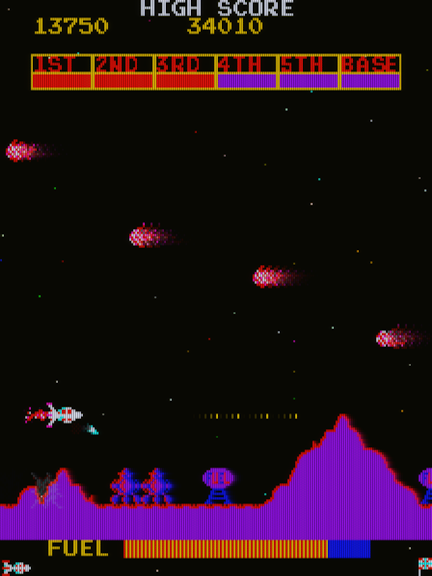
Scramble
Okay, I’ll come clean: I only played this because I saw it low on a shmups difficulty ranking. Sorry! Once I cracked past poor first impressions, this was a really nice little thing to spend about an hour grinding. It’s codifying a lot of basics that horizontal shmups would continue to use forever and ever – a heavy terrain hazard focus, and a downwards arcing missile whose arc depends on your current movement – though what didn’t stand the test of time is the fuel system, requiring hitting enemy fuel tanks (usually with said missile) in order to refill a slowly ticking death timer, which, at least on the first loop, feels delightfully ignorable, though supposedly becomes much more of an active concern on later loops. What also didn’t carry forwards is the levels transitioning completely seamlessly between each other without being bookended by bossfights, score screens and level transitions, which in this case is a great pacing boon to a game with already such a short runtime, as well as playing into the theming of the scenario being a single continuous mission. The challenges are awfully simple, but became more interesting as I spent more time with them, the challenge often being about wrangling an extremely slow, ship with a very deliberate heft to all its actions through otherwise very straightforward challenges: Stage 2 has fast-moving up-down enemies who, if not killed by the somewhat pathetic forwards shot, need to be precisely moved through their cycles or around entirely; Stage 3’s randomly-spawning meteorites both demand fairly active dodging and make it difficult to refuel throughout the entire level without specific positioning; and Stage 5 is an enemy-devoid terrain maze that requires very specific and tricky movement to wrestle the ship through. Were it not for the frustrating memorisation-y nature of Stage 4 I’d likely be pushing for more than a 1-ALL of this; not only are the game’s rhythms somewhat hypnotic once you’ve allowed yourself to become subsumed by the trancelike state of spending a precious weeknight grinding fucking Scramble, but the missile sound effect is simply the best we’ve ever been able to make.
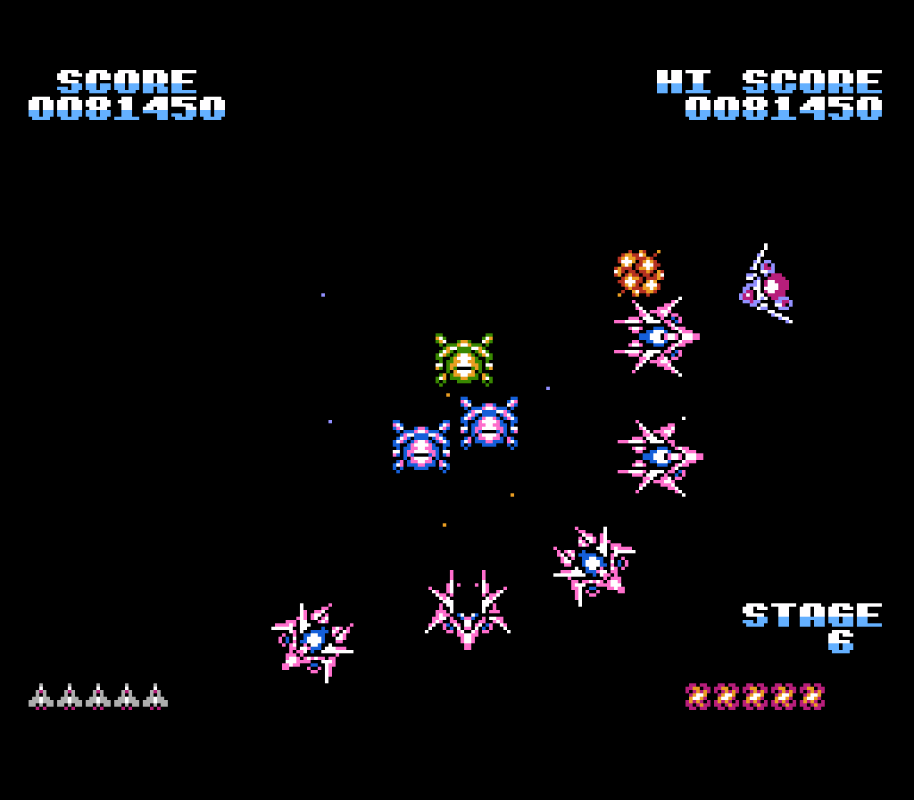
Gyruss (NES)
A lot of my enjoyment of this comes from the perspective: we’ve shoved Galaga into a tube, with enemies and bullets entering and exiting a fixed point in the centre of the screen which the player ship’s movement is fixed in orbit around. Enemies swoop in and out with erratic movement and scant few animation frames creating a surprisingly effective illusion of depth, more durable enemies get pushed back towards the bottom of the hole when shot and struggle to force their way back out, even just the ship’s speed becomes a spectacle when soaring around in circles rather than at a fixed point at the bottom of the screen. It’s just so cool!
It’s hard to muster a great deal of excitement towards its play beyond the sheer spectacle of it, but it’s fairly robust nonetheless: Galaga-style enemy waves fly in from different angles, often firing bullets whilst doing so, then pile into the middle of the screen, occasionally sweeping out to attack with more bullets or their own bodies. Each planet has an extra enemy type that appears alongside the enemy waves, giving a little variety to how enemies threaten space throughout the game, but as a whole it’s a little too hesitant to get really interesting. Enemy shots are fairly scant and always aimed directly, and while enemies – especially the planet-specific types – move in often very tricky patterns, they’re just as easily avoided by swooshing over to the other side of the screen, and the nature of the hazards means there’s rarely anything to attempt to intercept. Most deaths, then, will come as a result of how much information can exist on the screen at once – a wave of giant enemies swarming in, a group of targets in the middle covering what’s already there, other enemies resurfacing from the centre – and how easily projectiles coming from the centre can be obfuscated by all of the noise. And since there’s no timer on how long a level can go on for – the enemies reaching the bottom and killing in Space Invaders, or the enemies getting bored and leaving in Galaga, for instance – stages with a lot of special enemy spawns can feel like they drag on for an age, waiting for them to swing close enough towards your ship to shoot them without risking them getting too close and colliding.
But its motions are still really good fun. It’s impressive how readable this is when the screen isn’t so busy, every enemy slowly emerging from the centre acts as a clear signifier of their incoming aggression many seconds before they reach close enough to collide or fire a close shot. And this version’s playing with a lot more ideas than the arcade version: alt-fire ‘bombs’ that can be collected from power-dropping enemies, repeating stage gimmicks and even bossfights. The cost is that it seems a lot longer to clear a run than the arcade version, and given that non-score extends in this are driven by complete randomness – enemies on bonus stages have a random chance to spawn as item-droppers, which have a random chance to be extend items – that version might be the go-to once I get used to its control scheme whilst not actually playing on the cabinet it was designed for. But I can’t deny the fun I’ve had with this one regardless.
Salamander 2
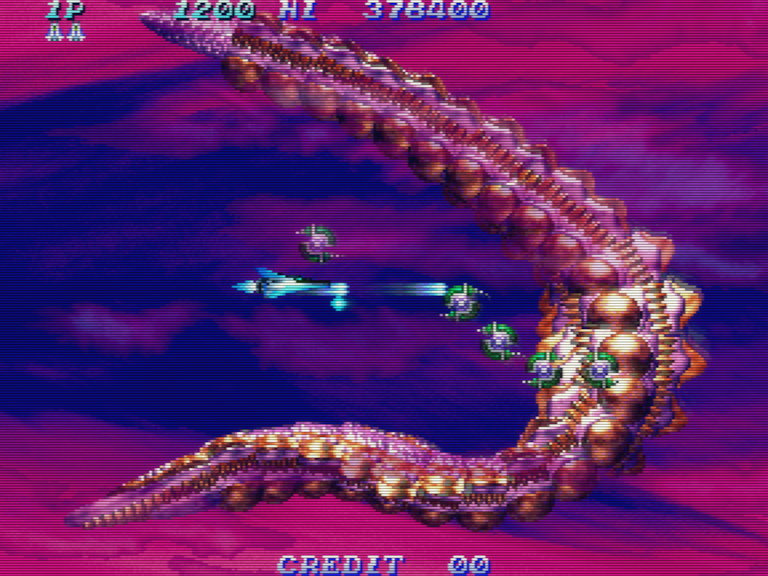
Frankly one of the best looking shmups I’ve played so far, the pre-rendered 3D is exaaaactly what I want one of these things to look like; when I booted this at the arcade I was blown away by the opening few seconds of the salamanders(??) swirling around, and just had to seek it out when I got home because the cab didn’t have the game’s name on it!! I wasn’t around for the Golden Age Of The Arcade, so whenever I saw cabs in amusement parks when I was younger they always had this same either pre-rendered 3D or actual 3D look, rather than hand-drawn sprites. I don’t remember them at all well enough to find one of the games I used to see around, but this is close enough to tickle me in the same way.
Though I’m not quiiite there yet, and the lack of shields/lives is not quite my speed, it’s nonetheless been really fun to spend time chasing the 1cc of this, and it’s definitely one I’d recommend for people at a similar skill level to me: the execution demand until the final stage is fairly low, making progressing more about learning the stages and understanding movement and target priority more than tricky dodging, with heavier bullet control only coming more into focus in the final stages. Gradius options remain the more fun tool in the genre, and while it never pushes for wild creativity with them there’s a few fun expected uses for them, namely the Stage 1 miniboss kill and making a nice little hat to block the Stage 4 missiles. The best new tool, though, is the Option Fire, letting you spend a full option to fire two strong homing shots out with the capability to clear out huge amounts of enemies, which then turns back into a smaller Option Seed to be re-collected; it’s basically R-Type Leo’s homing fire but with a well-considered downside and resource-management aspect tied to its use. The style of difficulty means that the game starts to feel just a little repetitive after a few plays, with the back end being a little rough – Stage 4 basically entirely playing itself except for one section, and 5 feeling just a liiittle rote for being the penultimate level of a game with quite a lot of ideas – but that’s really the only blemish I can place on the game.
Streets of Rage 2
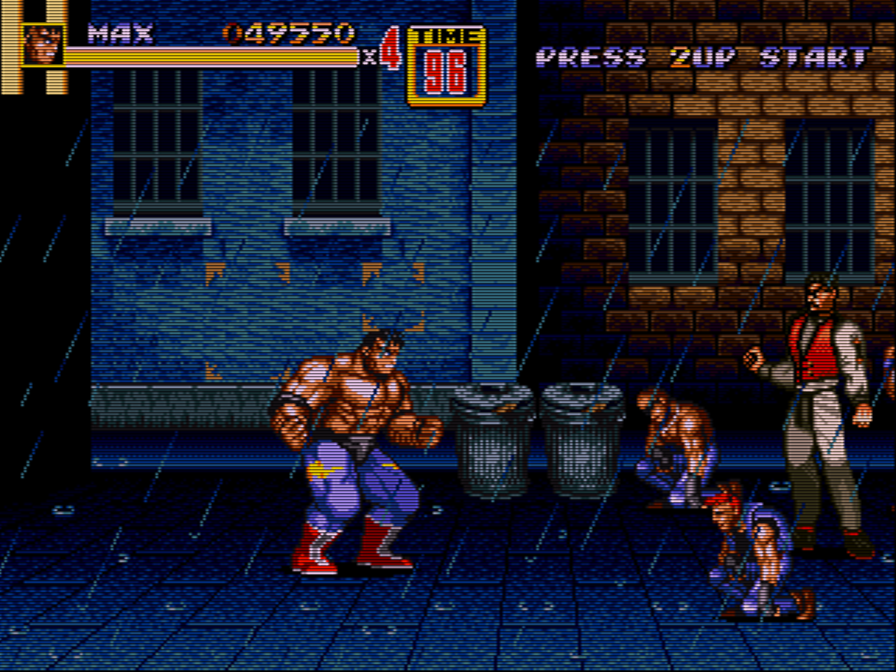
Growing pains, but also growing love. The more I play the more I realise that an already offputtingly long game encourages you to play as slow as possible: enemies that exist pre-spawned on the level become active on a player proximity trigger, meaning that groups of static enemies can be split apart by slowly edging forwards and hugging the left half of the screen until they’re dead – this is obviously never particularly exciting but feels especially sludgy come the first half Stage 7, where practically every non-filler enemy is pre-spawned which means every single encounter can be split up like this! And this is a bit of a nitpick, but the enemies with grab breaks make me really sad because sometimes I can do my awesome overpowered Max grab attacks on them but sometimes their break comes out so fast I've been hit before I know I've even grabbed them. Really, though, despite the growing nitpicks and irritations, I think I’ve only gotten more fond of this the more I’ve played. Movement speed being fairly slow across the board as well as sprite size being very small relative to the size of the screen (especially compared to Final Fight and its ilk), makes an incredibly readable beat-’em-up whose hardest challenges are all very easily-interpretable puzzles of positioning and enemy control. I’m also loving how different the all the characters play, now that I’m stepping out of just playing Axel all the time; the basic ‘jablock and spam dash attack whenever anything happens’ character is still my go-to for solo play, but I’ve been playing Max during 2p and going from the absolute most basic character to the most technical basically feels like a completely different game in terms of how their different toolkits result in needing completely different approaches to the same situations.
I’m also really, really growing a huge fondness for the aesthetics of this. Like yeah come on it’s Streets of Rage 2 or whatever – I of course do really like the music throughout the game, and the visuals and sound effects are generally Very Good, but what sticks out to me most is that, despite most of the runtime being very upbeat and fittingly action-y, it lets itself get a little emotional at the end: all of Stage 7 and 8’s music tracks feel like they’re carrying a little more vulnerability than everything that comes before it, with 7-1’s being still very fast but led by an uncharacteristically-dour descending minor key melody, 7-2’s being particularly harsh and abrasive, and 8’s being so slow and weary that, to me, it almost feels like it’s questioning whether the preceding hour of fighting was even worth it; feeling like the only reason we’re dragging ourselves over the finish line is because we’re there. I think this all works so well only because of the contrast: most of the runtime is faster, upbeat club music very gleefully backing the motions of Beating Up And Probably Killing Hundreds Of Guys – and when it's not it's still maintaining a fairly playful tone nonetheless – so the climax letting its heart bleed just a little feels powerful in a different way to if the whole runtime was focused on eliciting a similar mood.
1cced this twice on Normal this month, both 1p as Axel and in 2p as Max, with my friend playing Skate. You can watch the latter here, and see me flub inputs as Max for about fifty minutes and occasionally do something pretty cool. I definitely don’t think the former is anything to brag about, lol… I feel a Hard 1cc is very much within my grasp, and I’d like to try to get that one down at some point, but probably not for a while.
Pokémon LeafGreen Version
There’s some fun to be had playing within the world design of a much better game but otherwise this is a pretty bottom-of-the-barrel remake; one that copies and pastes an older game into a new set of systems with very little regard for reimagining the now-bulldozed intent of the original, but also then goes out of its way to heavily limit the use of said systems out of some desire for faithfulness. This results an an absolute worst-of-both-worlds approach as it both fails to be an accurate recreation of the original or a creative reimagining; the changes that are allowed through largely only act to suffocate any creativity on the player’s end: good moves being far less accessible, no access to breeding or Gen 2 evolutions until the postgame, etc. So much of Gen 3 feels like an effort to correct (or capitalise on) the inability to trade between a GB/C and a GBA, but at least Colosseum and XD have literally anything else to show for themselves otherwise.
ZeroRanger (White Vanilla)
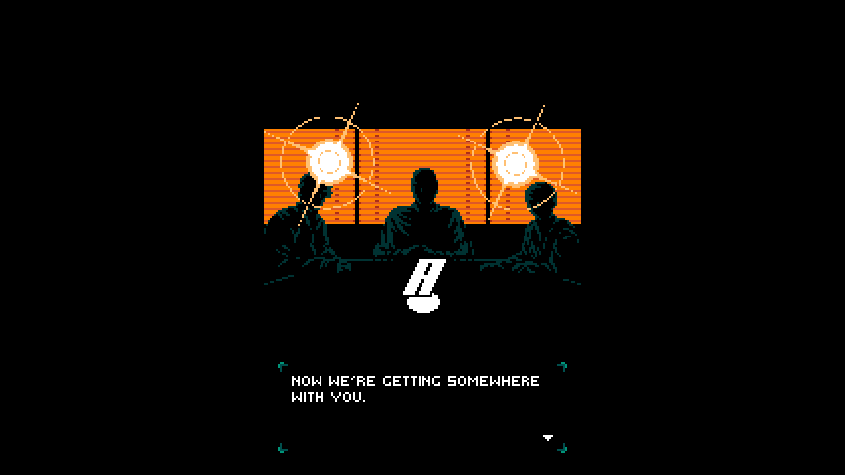
Over time I feel more and more cynical towards how this game structures and frames its One Weird Trick: it’s a shmup with a level select and grindable metaprogression continues which should say enough lol, but the structure basically just encourages grinding out the (frankly not very interesting) last boss in order to go through the (frankly not very interesting (but admittedly very well-presented)) TLB with as many lives as possible. So the punishment for failing ends up as good couple hours spent replaying a shmup that does not encourage you to interact with its levels in an interesting way, because it’s all busywork to get back to grinding the One Good Run of the final boss. And people tell beginners to play this one!! But White Vanilla’s pretty good! I’ve been looking for shorter shmups that aren’t the really unappealing-looking 2-5 min caravan modes, and while this pushing past fifteen makes it feel juuust a little longer than I’d like, it’s still a really fun truncation of ZeroRanger’s first loop; the key being instead of scoring revolving around the main game’s chaining system, it’s more a Judgement Silversword-esque ‘kill everything, kill it as fast as possible’ deal, with time bonuses being permitted by the screen fast-scrolling whenever there are no enemies on-screen. The result elevates levels that feel like they could be very passive normally to very fast-paced and aggressive affairs, and the reward for playing well is the game literally becoming shorter through chaining fast-scrolls. I’ve still got my gripes with how it plays, for sure – bullets pop better than practically every entry in the entire genre but the player blends in far too easily against green backgrounds, which gets really nasty with fast-moving enemies firing fast-moving bullets, which gets REALLY nasty in the sections you’re expected to stick close to enemies (which is a lot of them); and the mech combat kind of compounds onto that since you end up juggling a huge amount of orange bullets somewhere on your giant orange weapon and it gets really weird to track where exactly the bullets are and whether nudging yourself slightly upwards is going to cause you to drop one and die or not. Though that's much less of a concern on White Vanilla where you barely get to use it :p.
But, you know what the most understated strength of this game is? Between the amount of extends this thing launches at you for playing passably, and the fact that getting hit just doesn’t feel bad – no power or resource loss, no slow seconds-long fade-in as you wait to regain control of your ship, you just fly back a bit and immediately regain control – means that when a hit does feel cheap, it’s a couple seconds of frustration until it’s immediately shaken off. And it’s doubly palatable in White Vanilla as losing a life really doesn’t affect anything except your rank for the current section, and, well, your life stock. The most frustrating thing a shmup can do for me, particularly as someone with my specific set of processing disabilities, is to make single hits feel majorly punishing… which is kind of most of the genre just by virtue of having such low lives and extends :p but makes finding ones that aren’t like that feel rather special – and it’s not like it trivialises the mode, either, because pushing for high ranks is the main draw here more than anything. Most shmups, by their nature, end up being games about reaching the end of a really hard scenario, whereas this is more about getting really, really good at an easy scenario, and I think that's much more palatable to me right now. And definitely much more interesting than the main mode of this game :p.
Heretic
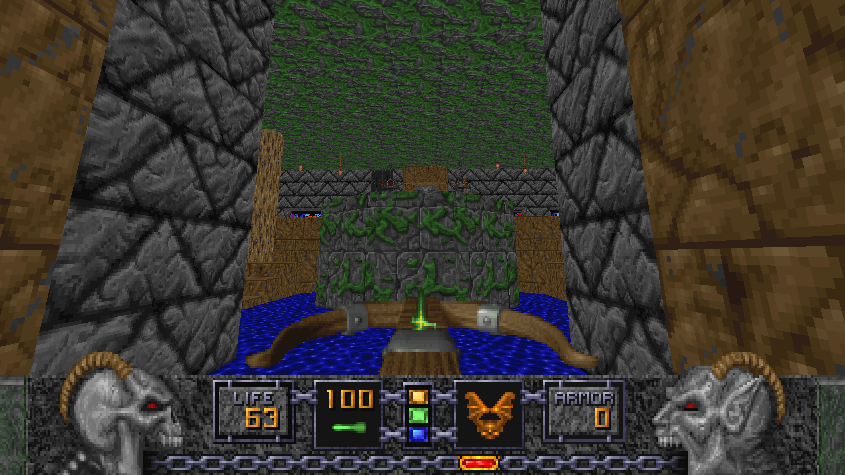
There was a moment early on where I thought, “this game is cool, but the hit feedback is pretty dreadful and I’m always ending up on low health without knowing what actually hit me”. Turns out, the Nightdive remaster’s ‘reduced flashing’ accessibility option removes the red flash on hit – the only on-hit feedback aside from staring intently at the UI rather than the game world during combat – and replaces it with… nothing! I am of course, as somebody who actively benefits from these, fairly grateful that these options are becoming more commonplace, but I would be much more grateful if they were actually played with before launch so somebody could feed back that it makes the game borderline unplayable, maybe? Thankfully the flashing in this game isn’t bad at all for me, only a little uncomfortable when vacuuming up tons of item pickups at once, but still, y’know. Pretty embarrassing show!!!
Anyway, I replayed Doom’s E1 on a complete whim before deciding to push that momentum into trying to play new FPSes instead. What characterises Doom’s combat (at least in the one episode I replayed :p ) to me is the extremely generous use of hitscan enemies, particularly shotgunners who can tag you before lining up a shotgun hit, and take off an awful lot of health in a single hit if too close. This implicitly draws out both target priority – hitscanners become the highest priority targets as they guarantee damage under their sightlines while every other enemy is dodgeable fairly simply – and weapon swapping – as shotgunners intensely punish poor or excessive use of your own shotgun, which otherwise gets by for most of the episode’s encounters. This is all important to mention as Heretic forgoes hitscanners entirely with every enemy being either melee or projectie-based (and extraordinarily skewed towards the latter), and frankly the drop in combat depth is immediately noticeable with kiting and strafing around everything feeling much more rote without as much to force different approaches to combat. Less unique enemy behaviours also makes it less capable of ramping up difficulty in an interesting manner, especially with no real intent on creating interesting enemy movement or shot behaviours – all the new enemies are one or two of More Bullets, or Bigger Bullets, or Faster Bullets with the biggest standout – the Lich’s tracking tornado – being welcome but annoyingly nonthreatening compared to its two single-shot aimed projectiles. It’s not all bad, to be honest, particularly as some later levels do some heavy lifting, with verticality being much more pronounced as projectile enemies placed on high platforms forces them to retain hard-to-reach vantage points with good area coverage; and E3M6 stands out by having its central room covered by extremely hard-to-remove projectile-spammy enemies, with the surrounding rooms bursting out with masses of high-HP enemies that work overtime to try to push you back out into their line of fire. The trouble is that when it’s not making strong, deliberate levels, its motions are much less interesting than when Doom just sticks a shotgunner into a group of other guys and calls it a day.
If not its combat, then Heretic’s strengths moreso come from its eccentricities. Obviously the inventory system and some of the items are very very silly – I killed the final boss by using the item that augments every weapon for a duration, that turned my rapid-fire bouncy ball launcher into an enormous bouncy ball launcher, and firing enormous bouncy balls at it until it died – but compared to Doom’s very abstract level geometry, I really like Heretic’s general intent on making levels feel like places. Sure, it all looks and feels like shallow, empty dollhouses in motion (not that dollhouses aren’t awesome, mind), but also allows for much more interesting visual setpieces and reveals that Doom just doesn’t really allow itself to do. In general I am kind of taken by this sort of aesthetic… the slightly overly grimy grimdark fantasy that gives ‘DnD homebrew ran by a guy who would definitely call me a slur’. I have grown to not like a lot of fantasy very much over the years, at least as a vessel for storytelling, but am still quite fond of these aesthetics when they are completely decoupled from all of the bits I don’t like… I’m hooting and hollering when I get to use cool spells or weird stupidcore Weapon (magic), sorry!!!
Can see myself windowshopping a lot of these old FPSes because they go down really easy (the people tell me if I can sip on Marathon (1994) then I can handle anything), with the ultimate goal of hopefully settling on a few I like and getting much deeper into them. Unsure if Heretic’s gonna be one of those – it does by and large just feel like a slightly blander flavour of Doom, but I probably owe it at least one higher-than-default-difficulty play at some point.
~*ʚїɞ*~
Thank you for reading, as always. Normally when I write these finishing paragraphs, I feel like I have a lot of motivation to burst into the next month looking to explore lots of different things, or pull open a specific niche, but this month almost feels opposite? I, for hopefully obvious reasons, only write here about games I feel like I can say something meaningful about, which means all the tons of shmups and other arcade games I played for just a little bit before feeling pushed away by one thing or another haven't been mentioned yet (off the top of my head... Darius Gaiden, Salamander 1, DoDonPachi 2 (Bee Storm) and 3 (DaiOuJou), Armed Police Batrider, Kingdom Grandprix, Xevious 3D/G, Super Cobra, Mushihimesama Futari, just to name a few!). It's been a great taste-building month, but the consequence is feeling like the horizons for the games I'm interested in have kinda shrunk tremendously, but I also don't really feel like putting time into the ones I've been drawn towards right now. Not that this is a bad thing, really – I've got my whole entire life to sit in my chair and play video games – but I can see myself taking a step back from the intense Freaking Fucking Gaming I've been doing lately. I've been getting back into baking lately, it's fun. Or maybe I'll get really into fucking. tetris, or something. Life can really be anything, if you let it.
On the topic of video games I do like, though, I finished writing out the CC commentary for my Pocky & Rocky hard deathless clear. Give that a watch if you're interested in learning the game, or just wanna see me play a game I'm actually reasonably good at. Pocky & Rocky, huh? It's like if videogames were good... I definitely do want to grind that one more in future; in particular I'd like to go for deathless no-bomb, since I learned how to deal with the final boss without using bombs recently, which would be the main hurdle of that run otherwise. But that probably won't be on the cards for a while :p.
And, don't forget to read the two other pieces I put out this month: the aforementioned on Galaga '88, and a more recent one on the original Metroid. Love you all. See you next month. ~♡