"Oh, that's neat!" ~ Things I Love in
Games I Don't
Needless to say, as someone who plays far, far too many video games and explores the medium in an awful lot of depth, I don’t tend to love a lot of the games I play! But that’s not a bad thing, really: for one, experiencing things you aren’t so fond of is just as important for building an understanding of taste as things you are; and for two, it keeps you exposed to new and different ideas, some of which might end up pushing you towards new favourites. I personally have a craving for seeing new and original things, so even if I don’t like the complete package of a game, oftentimes seeing just one or two interesting ideas that are new to me is all it takes for me to appreciate the time I spent with it. Though I write quite a bit about everything I play through my faea gaming journaling, I only tend to dedicate a significant amount of space to games I love, so it seemed a nice idea to give a bit of a stronger spotlight to some of those I’m less fond of but still found very valuable, that wouldn’t get one from me otherwise.
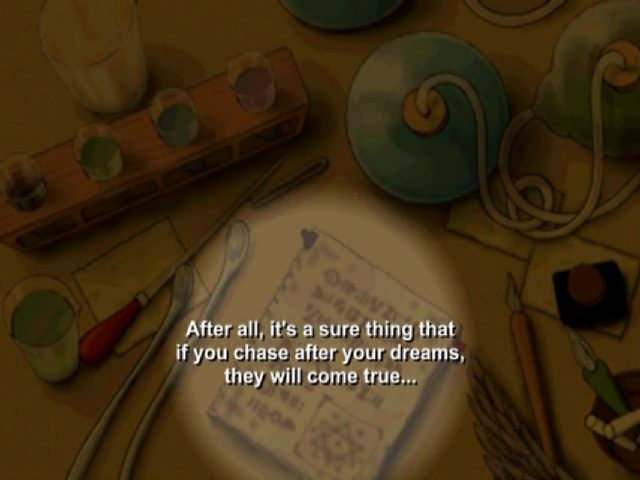
Atelier Marie: The Alchemist of Salburg
Atelier Marie is probably the overall sharpest-feeling of the games on this little list; a hybrid turn-based and item-crafting RPG where both sides feed into each other really organically: exploration (and thus combat) rewards raw materials for alchemy, alchemy rewards usable items which can both be turned in for money or used directly in combat, and both reward character EXP which improves effectiveness in both areas. It can often feel a little repetitive and cumbersome – rare items being beholden to randomness in exploration, and alchemy later on being a lot of mentally-spreadsheeting crafting trees – and it faltered a little bit in my experience near the end, where the major combat encounters (optional dungeon notwithstanding) had already been cleared and the crafting side turned to almost singularly trying to hunt and craft up to the game’s Ultimate Items, but I enjoyed it well enough through most of its runtime regardless.
Beyond the game’s Neat and Fun combat-crafting dynamics, the main thing that stuck with me is the way the game’s endings are handled tonally. The game runs on an ‘action limit’ of five in-game years after which the game ends and gives an ending based on overall performance, but only one of these endings is strictly bad; practically all of the ‘in-between’ endings simply represent the different ways that life can take the main character, Marlone. I had a specific experience with this that resonated with me a lot: I mismanaged my time really poorly near the end of the game, was about two days short of being able to reach the aforementioned optional dungeon after spending about a full year preparing for it, and rather than something much more glamorous I might have landed on if I were able to reach and clear the dungeon, I instead reached a very quaint ending where she gets a teaching job at her academy. It’s a very clever way to communicate a message I found rather sweet: that performing better or worse during one particular phase of her life doesn’t necessarily reflect a ‘good’ or ‘bad’ outcome, just a different one.
Hebereke
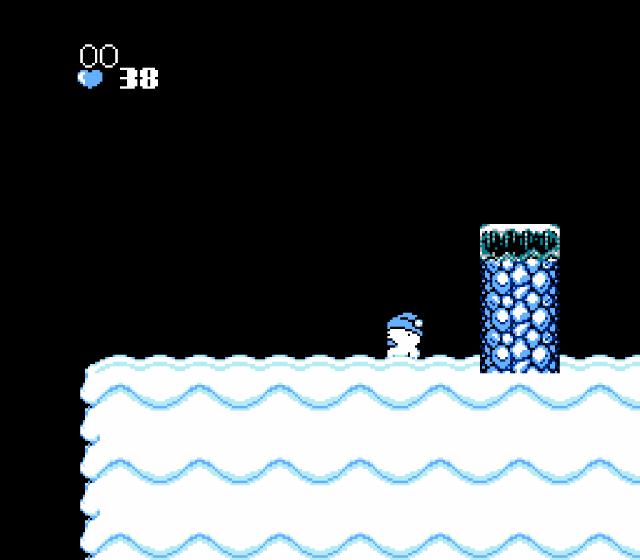
I’ll admit, I sometimes struggle with platformers on a very, very basic level; I was having an embarrassingly difficult time just having to hold ‘down’ to stomp enemies in this game, instead falling onto them and getting hit all the time. That, compounded onto the fact that none of the immediate challenges in this game are ever really that interesting – it’s an early exploration-focused platformer that’s far more interested in exploration than in its individual rooms being massively engaging or creative – made especially the early bits of this game a bit of a drag for me to get through; I was pretty much ready to drop the game juuust before getting the first major upgrade, but I found myself really starting to appreciate it after I reached it.
The upgrade in question is one that lets you cling to and shimmy up walls, and it really captivated me for a couple of reasons. The first is that it’s a very organically satisfying upgrade for the sort of game Hebereke is – as well as the obvious allowing access to new areas, during the game’s (admittedly few) legitimate platforming challenges it allows recovery from missed jumps or just awkwardly skipping around them entirely by shuffling up the sides of all of the blocks. The game's world is small with a lot of time spent running back and forth through the same screens, and it reframes those sections in a cute and satisfying way. The other is that it’s the moment the game breaks out into a far more open experience: while the exploration isn’t very involved, largely being map marker-hunting, the slow, exploratory wandering across the world is a fantastic vessel to show off the game’s absolutely wonderful late-NES aesthetics – the spritework has a really sharp grip on the NES palette as well as being so bright, detailed, charismatic and just plain silly, and some of the music would probably be ruining my life right now now if I’d heard it first as a kid.
It can feel to me like a cop-out to claim your favourite part of a game you didn’t enjoy that much was the visuals or music, especially in a context like this trying to highlight the specific most interesting parts of a game. But gameplay can be used to uplift other parts of the game, and the specific ways gameplay can put a spotlight on the game’s aesthetics is something I’ve been thinking about since playing the slow, trudging and incredibly beautiful King’s Field IV; those qualities – the game forcing you to take it slow, explore, maybe stop and think for a little – are what I identified from that game as effectively doing so, and all three I see heavily reflected back at me in Hebereke. I can’t say it’s the most fun I’ve had playing a platformer or an exploration-focused game, but it’s certainly been one of the most inspiring.
Planet Laika
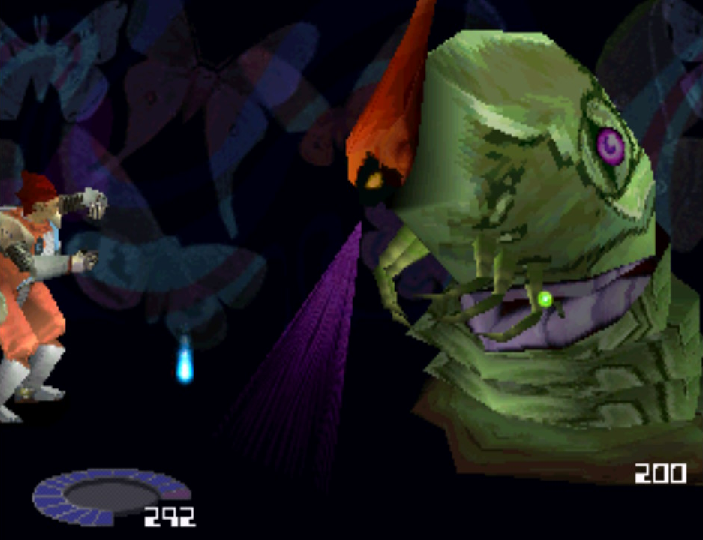
Planet Laika is a really fascinating but also extremely messy-feeling game. It’s a PS1 adventure game with the same wonderful pre-rendered stylistics as the console’s most beautiful RPGs, effectively playing as a 10-hour PS1 RPG without any of the RPG bits – but it also has a completely bespoke combat system, despite it being very simple by itself and there being no other systems for it to interact with. Its story, among a host of different ideas, takes a really strong and genuine-feeling interest in its plural main character, and then oftentimes (and perhaps unsurprisingly) feels very clumsy in actually delivering on its range of narrative ideas. It draws from a fairly eclectic selection of visual motifs – colonised Mars, humans with replaceable dog faces, Christmas and the Bible, to name a few – some of which I found extremely compelling and some of which just felt very silly! It feels, if nothing else, like the sort of game that could have only come out in a very specific time, under very specific circumstances.
Funnily enough, it’s that strange, bespoke-yet-vestigial-feeling combat system that’s been my main takeaway from this game. It involves controlling a ball that oscillates up and down on a 2D plane, able to move it slowly forwards or teleport it back to the start in order to hit it into enemy projectiles to reflect them back and deal damage. The intersecting limitations of its controls made it take an awful lot of focus – surprisingly so, considering it’s never particularly difficult; those two aspects combined made it feel almost meditative, having me focus entirely on the fight without any distractions. In a game swinging at ideas of identity and loss of self in a host of different abstract ways, where the combat is directly, textually leaning into these ideas, I felt a combat system so well able to make me feel like I, the person playing the game, was holding onto my self in a way each character struggles with, was incredibly striking to experience – despite how disconnected it does feel from the rest of the game systemically.
And that last thought digs at a lot of my preconceptions on the purpose of mechanics and systems. I tend to challenge the purpose of any and all systems and mechanics present in a game, as I often feel a lot of basic ideas and genre trends can easily be ‘taken for granted’ and put into games without considering what their purpose actually is, or how removing them might benefit instead – my own game project was driven by seeing a game I liked, and thinking how it might change if I took out the bits I wasn't so compelled by. And under that lens, Planet Laika’s combat easily comes off as vestigial in what’s otherwise very straightforwardly an adventure game with nothing for the combat to converse with; it’s a game wearing the same aesthetic flair as the PS1’s most popular RPGs, made by a studio behind almost exclusively RPGs and action games, so does the game only have combat out of some feeling of necessity? But it rather feels like the combat serves not a systemic holism, as I’ve been describing, but an aesthetic one – it’s there to elevate the narrative ideas presented, rather than slot in perfectly to a web of other systems like the final piece of a jigsaw. And there’s no real reason I should be seeing aesthetic holism as any less valuable than the systemic.
~*ʚїɞ*~
Thanks for reading, as always. I wonder how interesting a more casual piece like this is? I’ve been a little hesitant to write one, because it feels like a little too much of an overlap with faea gaming in terms of cadence and what I’m actually writing, but I also feel like putting a slightly bigger focus on a few games like this, and putting them under ever-so-slightly different contexts, helps bring out something slightly more interesting than my five-minutes-after-completion immediate reactions like I do over there :p. It’s also refreshing to let my sometimes stiff-feeling ‘proper’ prose relax a little, and between that and not having to focus so singularly in on one game, it’s a nice way to get myself writing a bit more. I think if this format feels good to me – talking about more games, in a bit less depth than a singular piece but in more depth than in my journal – I could see myself doing it a lot more, coming from different angles.
I’m also happy to give Atelier Marie and Planet Laika a bit more of a spotlight in particular, the former because I was skimming over my older faea gamings during writing this, and I practically said nothing about that game!; and the latter because it’s not a game I’ve had an opportunity to talk about since migrating to my own website. All of the games I talked about in this piece require fan translations, which you can get here for Atelier Marie, Hebereke, and Planet Laika.
As usual, if you like what I do and you’d like an easier way to follow it, you can subscribe to my Substack and get these beamed directly to your email box – it’s free and always will be. I’m also going to make an explicit mention of my RSS feed; I’m not always on top of updating it, but it’s maybe a slightly more convenient option for some people… but I’m mainly mentioning it because the feed was broken for half a year and no one told me :p. See you next time. ~♡